Achema
Achema is a leading producer of nitrogen fertilizers and chemical products in Lithuania and the Baltic states. First construction works of the factory date back to 1962, however officially the company was founded on February 9, 1965 after the first tonnes of synthetic ammonia were produced in a newly launched ammonia unit.
Achema employs about 1300 people; annual fertilizer production accounts to about 2.0 million tonnes.
Achema is mainly engaged in nitrogen fertilizer, ammonia, nitric acid, formalin, urea formaldehyde – melamine resin, industrial gas, and aluminium sulphate solution production.
- In 1989, Achema became a member of International Fertilizer Industry Association (IFA).
- In 1997, Achema became a member of Fertilizers Europe (formerly European Fertilizer Manufacturers Association) committee and afterwards a real member in 2003.
- In 1998, the company was certified according to ISO 9002 international standards of quality.
- In 2000, after implementing an Environment Protection Management System Achema was certified in compliance with ISO 14001 international environmental management standards.
- In 2003, Quality Management System was recertified conforming to ISO 9001 international standards.
- In 2007, Achema implemented Occupational Health and Safety Management Systems in accordance with BHI OHSAS 18001 standards.
- In 2012, Achema wins the ‘Green Company of the Year’ award among Lithuanian business leaders.
- In 2015 – in the National Responsible Business Awards (NAVA) Achema received the most prestigious award – “Socially Responsible Company 2015”.
June 5, 2013 – the Company is the winner of ‘Most Environment Friendly Process’ nomination for greenhouse gas emission (N O) mitigation in the nitric acid manufacturing process. The annual contest ‘Achievements in Environmental Protection’ was organized by The Ministry of Environment of the Republic of Lithuania and Lithuanian Confederation of Industrialists.


Our mission
-
Be a reliable partner and the main supplier of nitrogen fertilisers in the agricultural sector of Lithuania, Scandinavia, Eastern and Central European countries;
-
Develop sustainable, effective and safe production;
-
Conduct responsible governance of the company;
-
Develop new products with high added value.
Our vision -
Be a business leader in the area of high-quality fertilizers and chemical products based on the advantageous technologies and sustainable production in Lithuania and foreign markets.
History
The roots of the company lie in 1962 when construction of nitrogen fertilizer factory was started near Jonava city at the confluence of rivers Neris and Sventoji. A convenient geographical site predetermined the location of the factory. Important highway and railway branches connect the enterprise with the biggest cities of Lithuania and the Baltic Sea port.
After two and a half years of intensive work production of synthetic ammonia was launched on February 9, 1965. This date marks the establishment of the company and also the beginning of large scale chemistry in Lithuania.
A-1 ammonia plant, start of ammonia solution production.
1965

Methanol plant launched.
1968

A-2 ammonia plant and urea (units I and II) plant launched.
1971

Nitric acid plant launched (UKL units No.1,2 and 3 – first production line).
1972
Ammonium nitrate, urea-formaldehyde resins (UFR) and polyvinyl acetate dispersion (PVAD) plants launched.
1973
Nitric acid production unit UKL No.4 (second production line).
1975
Nitric acid production unit UKL No.5 (second production line).
1977
A-3 ammonia plant (A-1 at present)
1978
Start of formalin production.
1979
Nitric acid production unit UKL No.6 (third production line)
1985
Start of liquid NPK fertilizer production.
1987
Becoming a member of International Fertiliser Industry Association (www.fertilizer.org). IFA certificate
1989
Privatisation of VĮ “Azotas” – establishment of AB “Achema”.
1994
Production of urea-ammonium nitrate (UAN) solution launched.
Becoming a member of Engineering Ecology Association (IEA).
1995
Becoming a committee member of Fertilizer Europe (formerly known as European Fertiliser Manufacturers Association (EFMA), www.fertilzerseurope.com).
1997
Quality Management System according to the requirements of ISO 9002 Standard implemented.
1998
Production of aluminium sulphate solution and start of serial UF resin production.
1999
Environment Protection Management System according to the requirements of ISO 14001 Standard implemented.
2000
Concern “Achema Group” was established following the merging of SC, JSC subsidiaries.
2001
Launch of urea production unit No.3.
Nitric acid production units UKL No.7 and No.8 (fourth production line).
Nitric acid production unit GP-1.
Launch of calcium ammonium nitrate (CAN) production and start of condensate purification plant.
Launch of the first cogeneration power plant.
AB “Achema” became a real member of Fertilizer Europe (formerly known as EFMA (www.fertilizerseurope.com)).
Establishment of branch “Gaschema”.
Quality Management System according to the requirements of ISO 9001 Standard implemented.
2003
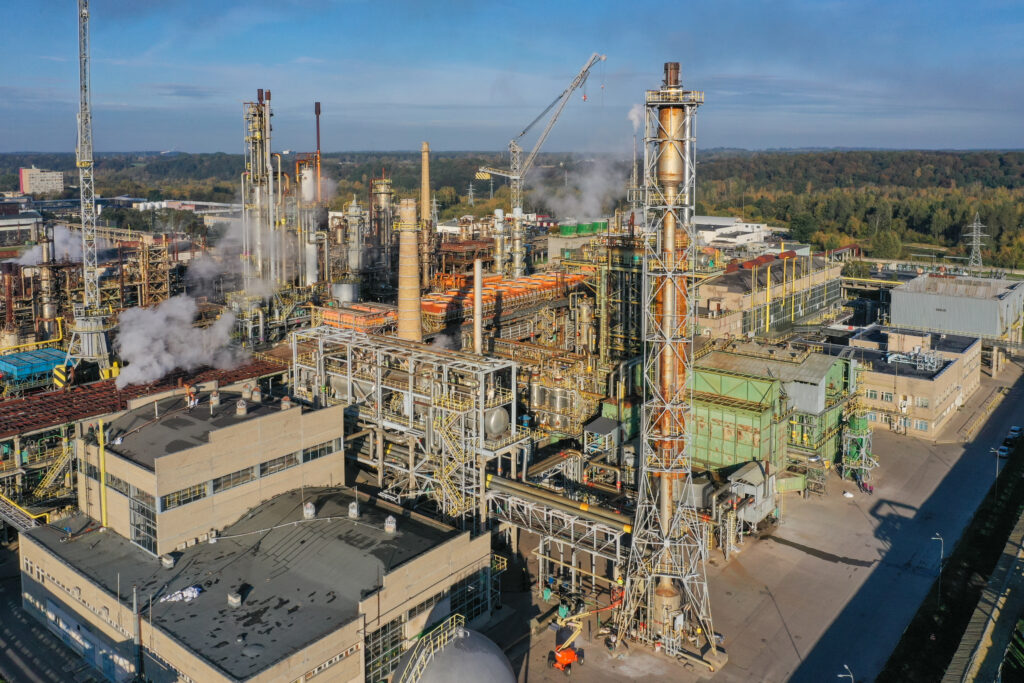
Acquisition of 50 % shares of distributing company “Agrobaltic” GmbH.
2004
UAN plant capacity expansion to 1,336 thousand tons per year.
2005
Urea plant capacity expansion to 445.5 thousand tons per year.
First operations in ammonia storage tank.
Achema started operations of the second ammonia plant and A-2 chemical water treatment unit No.2.
Urea-formaldehyde resins capacity expansion to 75 thousand tons per year.
2006

Launch of liquid carbon dioxide plant.
Start of AdBlue production.
Implementing of “Workers’ protection and healthcare management system” complying with BSI OHSAS standard requirements.
2007
Launch of new methanol plant.
Nitric acid production unit UKL No.9.
Launch of gas mixtures production unit.
2008
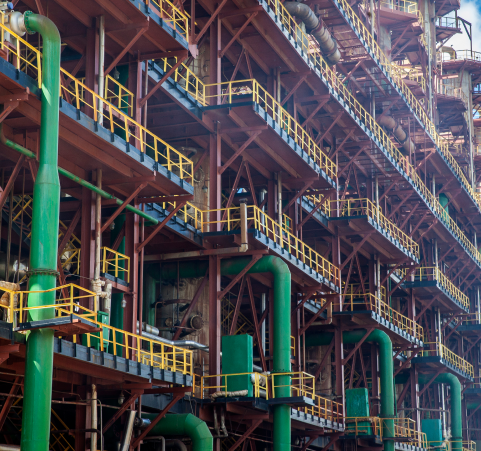
Urea production unit No.4.
Start of serial melamine urea formaldehyde resin production.
2009
Launch of the second cogeneration power plant.
In September, the 47 MW cogeneration gas power plant No. 2 was put into operation. Together with the 21 MW cogeneration power plant No. 1, which has been operating since 2004, it can fully supply AB Achema with electricity and supply part of the electricity to the market.
An investment project entitled -Introduction of new liquid and gas product manufacturing technologies at AB Achema- has been launched, with support from EU structural funds.
To increase the reliability of the company’s electricity system, the modernization of AB Achema’s electricity distribution system is being carried out with partial EU structural support.
2011
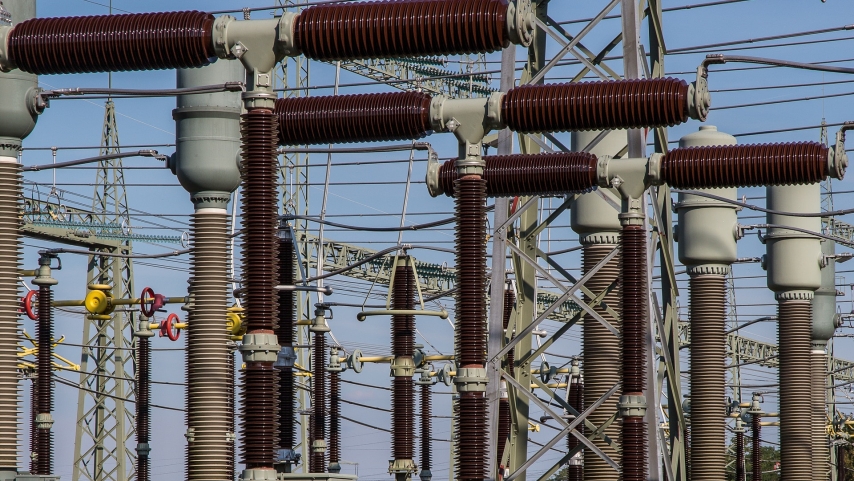
Completion of two joint implementation projects in the nitric acid plant, resulting in a reduction of more than 85% in greenhouse gas (nitrogen oxide) emissions into the atmosphere.
Construction work has begun on a new Grand Paroisse-type nitric acid unit, as the existing nitric acid capacity was no longer sufficient for the fertilizer production units operating at maximum capacity.
2012
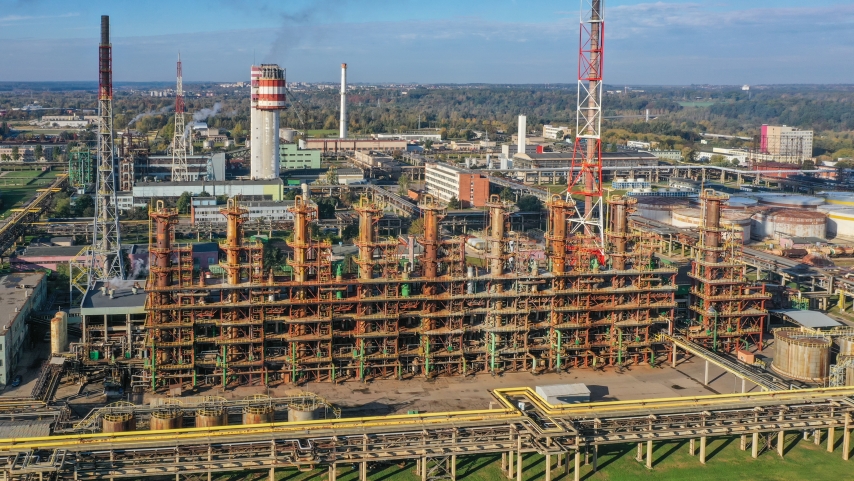
To optimize the steam production process, the auxiliary boiler burners in ammonia plant No. 2 were replaced. EU Structural Funds support was received for the implementation of the project.
The first stage of the modernization of ammonia plant No. 1 was completed. The aim of this work is to reduce the consumption of energy resources, primarily natural gas, in the production of ammonia.
The modernization of ammonia plant No. 2 has begun in order to reduce energy consumption. The project is scheduled for completion in 2015.
2013
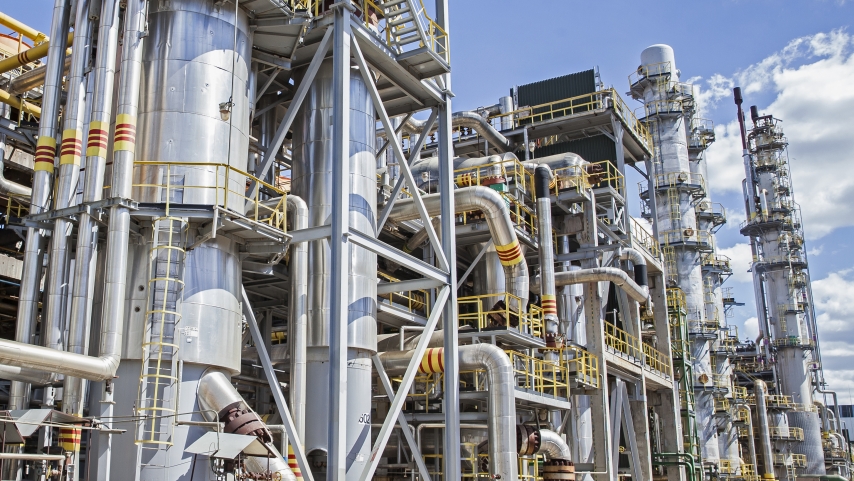
AdBlue production and storage expansion project completed.
2014
In April, the modernization of electricity distribution networks was completed with the support of EU structural funds.
In September, a modern air separation unit began operating, producing clean nitrogen gas, process oxygen gas, liquid argon, nitrogen, and oxygen. This air separation unit will enable the production of products that are important for healthcare institutions.
In November, a new Grand Paroisse-type nitric acid unit was commissioned, which will increase nitric acid production by 240,000 tons per year and enable the company to reduce its energy costs.
In order to further reduce natural gas consumption for ammonia production, the reconstruction of the process condensate scheme at ammonia plant No. 1 has been completed and the second stage of the plant’s modernization has begun.
The first stage of the modernization of ammonia plant No. 2 is continuing, with the project scheduled for completion in 2016.
2015
To reduce energy consumption, the synthesis gas compressor and turbine at ammonia plant No. 2 were reconstructed and a synthesis gas drying unit was installed.
Slow-acting nitrogen fertilizer production with a capacity of 320,000 tons per year was introduced in the urea plant.
To increase energy efficiency, the synthesis column and reforming reaction pipes were reconstructed in ammonia plant No. 1, and the linings of individual vessels and apparatus were replaced.
2016
Implemented urea formaldehyde resins (UF) and melamine urea formaldehyde resins (MUF) storage expansion project, increasing product storage capacity to 2,770 tons.
2017
The ammonium nitrate plant underwent modernization of its control and emergency response systems, ensuring safer, more economical, and more efficient production.
A modern formalin production unit with a concentration of up to 55% began operating at the organic products plant.
2018
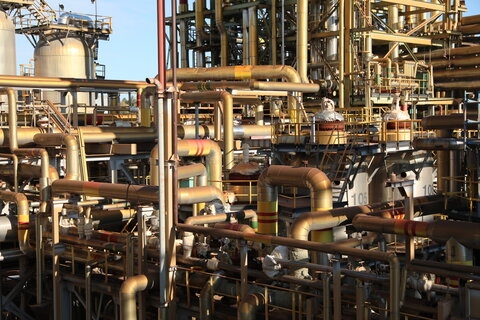
The energy efficiency improvement program for ammonia plant No. 1 is continuing, with the modernization of technological equipment for reforming and synthesis.
The third project to modernize the company’s electricity distribution system has been completed, improving the functionality of the electricity distribution network, reducing electricity distribution losses, and ensuring higher quality and security of electricity supply.
2019
Implemented a project to expand urea formaldehyde resins (UF) and melamine urea formaldehyde resins (MUF) production, increasing production capacity to 100,000 tons per year.
2020
In fulfilling the Company’s environmental obligations, secondary treatment technology was installed in the UKL-7 unit, reducing nitrogen oxide emissions in the unit by 50 percent – almost 18 tons per year.
2021
Natural gas saturation device was installed in ammonia plant No. 2 to reduce energy consumption.
Project to renovate the perimeter lighting of the Achema AB territory has been implemented. The installation of LED technology lighting fixtures and the renovation of the infrastructure have reduced electricity consumption and operating costs.
2022
An additional electricity generation project was implemented to increase the company’s energy efficiency. Additional electricity is generated by reducing high-parameter steam in a new 1.8 MWh pre-pressure steam turbine.
New 600,000 m3/h capacity air fan with a frequency drive was installed to increase the energy efficiency of ammonium nitrate production, which reduced the unit’s electricity consumption and increased production flexibility.
The fourth project to modernize the company’s electricity distribution system was completed, improving the functionality of the electricity distribution network, reducing electricity distribution losses, and ensuring higher quality and security of electricity supply.
2023
Magnesium nitrate production – automated raw material (brussite, magnesite) dosing system has been modernized, which ensured efficient use of raw materials, precision of the production process, and higher quality products.
2024
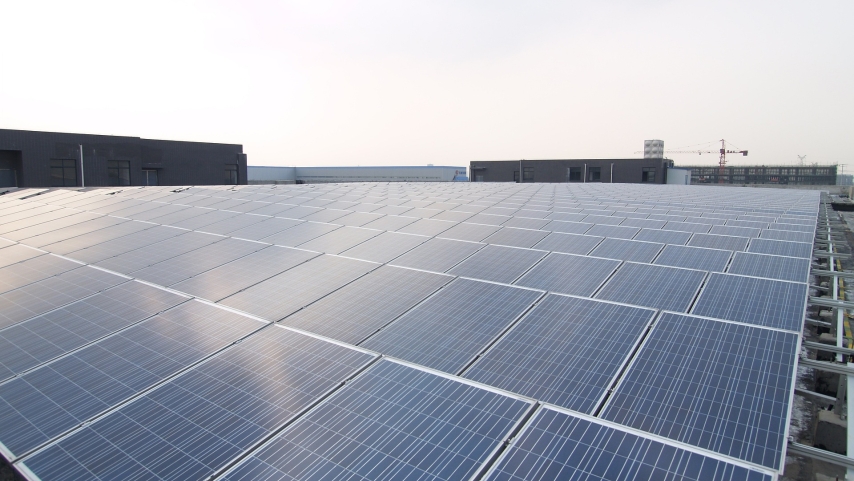
In order to develop sustainable energy and increase production efficiency, solar power parks with a total capacity of 6.7 MW have been installed.
2025
Management
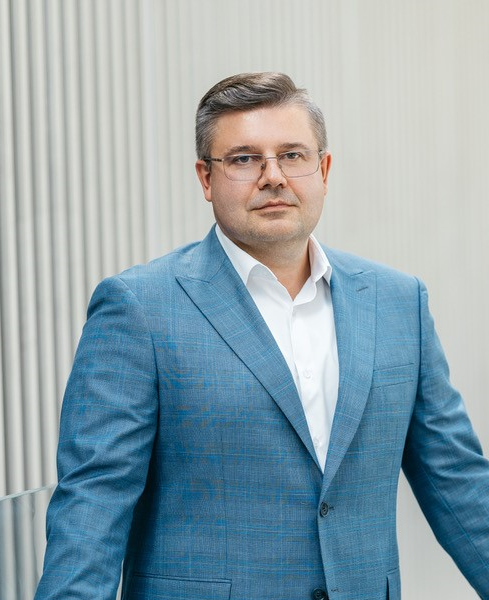
Ramūnas Miliauskas
CEO
Evaldas Venckus
Economics - Finance Director
Egidijus Juzėnas
Technical Director
Mindaugas Vidzickas
Production Director
Vytis Varanavičius
Commercial Director
Kasparas Kazakevičius
Head of Procurement DepartmentPartners